26/01 – Dia Mundial de l’Educació Ambiental
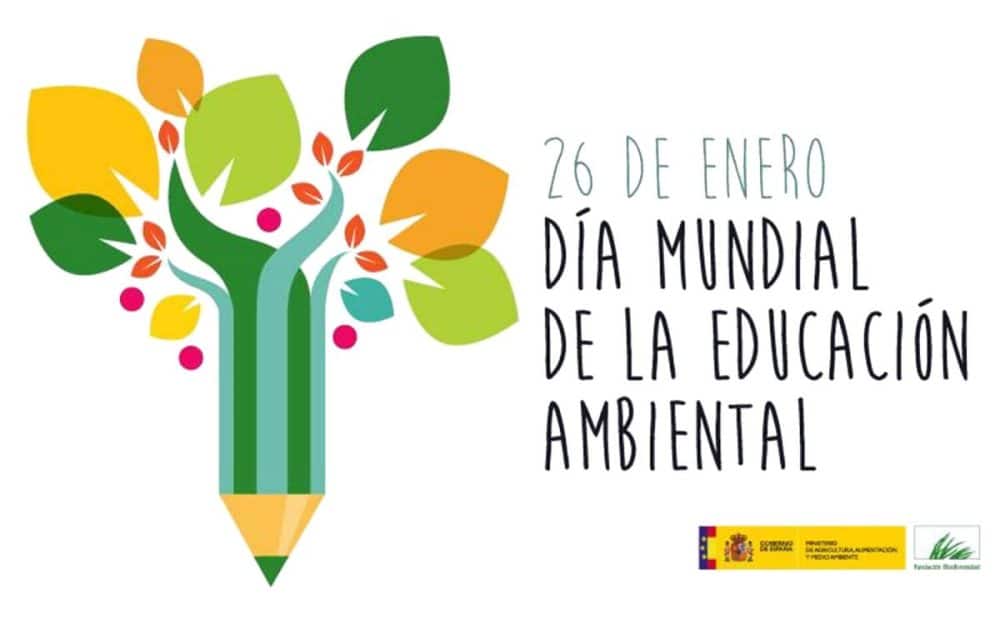
Today, January 26, and every January 26 since 1972, is World Environmental Education Day, which aims to raise awareness about the development of humanity and the conservation of our planet.
People have managed to create a habitat isolated from nature: we open the tap and drinking water comes out, we are dining on the porch of the garden and we see in detail the faces of all friends despite the fact that it is black at night, we have rooms with a regulated temperature, freeing ourselves from the cold or heat of the outside, we have unlimited availability of food in supermarkets, regardless of whether it is the season of melons or oranges or whether the farmers have had a good year or not. This new way of living of the human being, far from nature, but obtaining its resources and raw materials, has generated serious environmental problems in the environment that are not in sight of who generates them: the demand for electricity, the generation of waste, polluting emissions from industries and means of transport or excess water consumption. In reality, however, the interests of humanity go through the persistence of nature, and destroying them is contrary to the very interests of the human life system.
This last 2022 has become clear, more than ever, that something is happening to nature: the increase in temperature and meteorological phenomena seems to indicate real climate change.
However, the climate emergency facing the planet is a very difficult challenge for humanity.
Unfortunately, our society addresses problems when they become visible, when they are placed in an immediate environment. Also, in the middle of an urban space, specifically designed to isolate people from nature and maintain their own habitat and microclimate, it is very difficult to make visible the changes and degradation that the planet is suffering.
In this sense, environmental education (AE) has a great challenge: to make evident the relationships between the actions that take place in this human microhabitat and the environmental effects they cause to influence a real change in the present that improves the future.
“Environmental education is an ongoing process in which individuals and communities become aware of their environment and learn the knowledge, values, skills, experience and, also, the determination that enable them to act, individually and collectively, in solving present and future environmental problems.” International Congress of Education and Training on the Environment, Moscow, 1987.

The EA that has been most successful, to date, has been aimed at a school audience and has been based on the generation of experimental learning, through visits to nearby nature, practical workshops or generating easy-to-manipulate materials to work in the classroom. Experiential experiences that can generate an impact important enough for that little person to internalize it. Thus, people are sensitized during their growth process, offering a solid base of knowledge and influencing their attitudes and behaviors.
The small individuals who receive AE have – in general – much more sensitivity to the environment than their parents have, and influence small decisions in the family environment, increasingly raising awareness among adults of their environment. However, they are not politicians with decision-making power over environmental issues, nor are they the ones who run jeans factories with unimaginable water consumption, nor are they those who have an abyssal life without time and buy salads packaged in plastic to open and eat or a vacuum-packed fried egg.
The EA has a solid path taken in the school world, and it must continue working so that the learning done is internalized and maintained throughout the life of the individual because, one day if we are there on time, it will be these small individuals who will make the big decisions within society.

In the same way that the EA has worked tirelessly to offer good training to children and young people, it must be believed that it can act in the training of adults, in the training of those individuals who today can change behaviors, attitudes and who may demand changes in their environment, their suppliers, their workers or their family unit. Many of these individuals already have a knowledge base, because they are those young people who lived through the beginnings of the EA or because they are influenced by the youngest aware of the family environment. However, they are also those who have stopped walking in that process of becoming aware, and are able to recycle at home because the child asks for it but not take any environmental measures in their work environment. If EA, by definition, is a permanent process, continuous throughout life, it cannot fail to be so when we reach adulthood, much less in the world of work.
The EA is the tool we have to involve society in a new culture where sustainability is the backbone. In addition, this must work at a local and intergenerational level, generating experiences and emotions that cause a transformation in the habits and attitudes of people with their immediate environment, and in this way have an impact on a global transformation.
From the MedFoto contest, photographers and amateurs, make known the natural values of the Mediterranean, each from its territory, making visible environmental problems that take place in the marine environment and promoting a responsible and respectful attitude of the people for whom the sea, in one way or another, is the center of its activities. A proposal that uses the art of photography to generate a visual account of the state of our relationship with the sea and thus work on environmental awareness and the necessary sustainability in the actions we carry out at sea.
Today, January 26th, Environmental Education Day, is a good time to stop, look at the path taken and reflect on how we can work so as not to lose anyone on the way to becoming aware of the development of humanity and the conservation of our planet.